Forced Circulation Evaporator
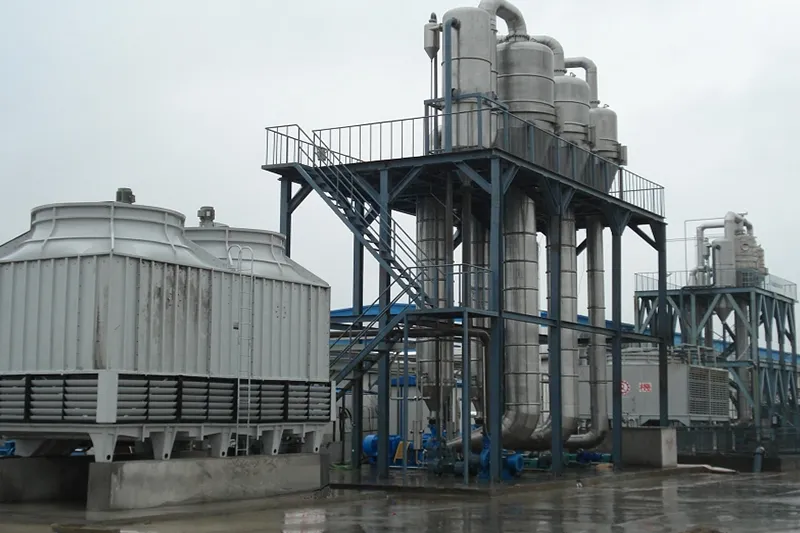
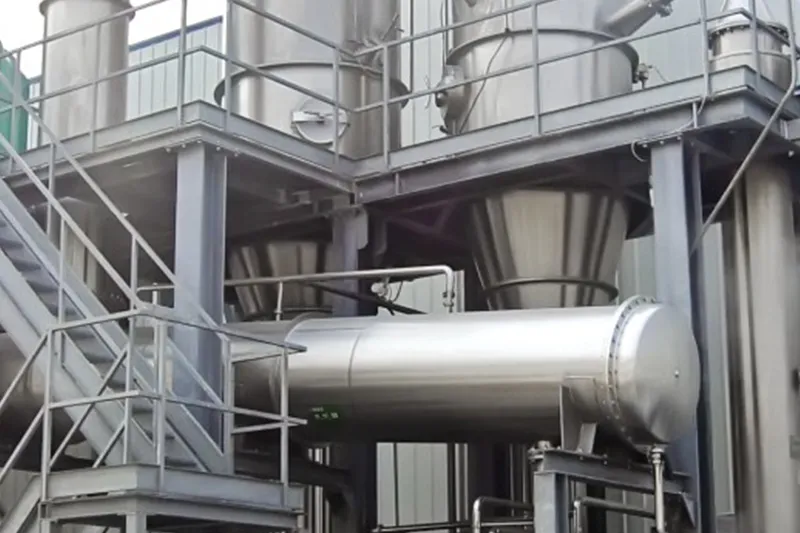
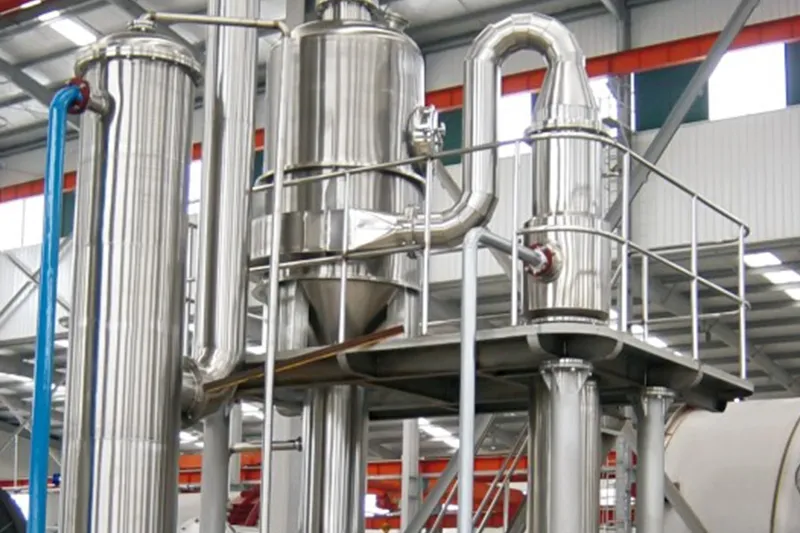
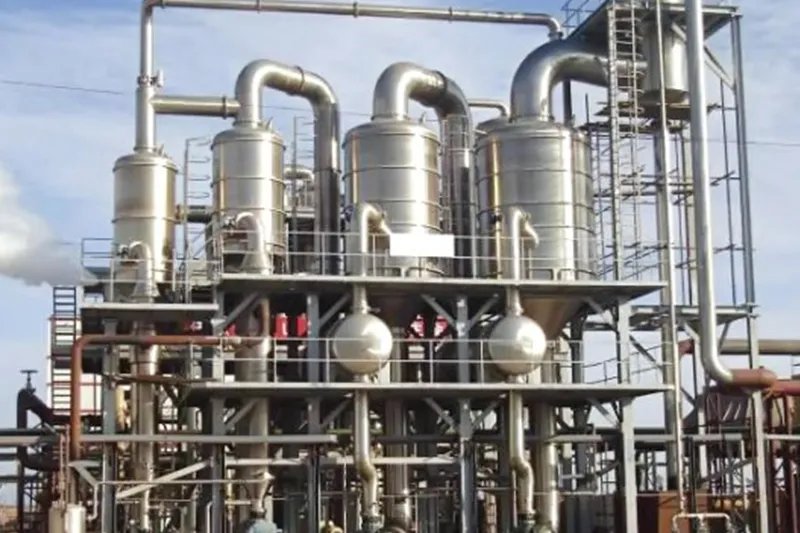
Forced circulation evaporators use a circulation pump to move the product at high speed through the heating tubes, which is suitable for thick liquids and products that contain insoluble solids. The liquid heats as it passes through the tubes, then enters the separator, where evaporation takes place and the vapor separates from the liquid. The remaining liquid returns to the circulation pump and passes through the heating section again until it reaches the required concentration. Since the pump keeps the liquid moving even as it becomes thicker, the evaporator can handle high-viscosity products more easily and reduces the chance of deposits forming on the heating surfaces.
The circulation pump moves the liquid upward through the heating tubes at about 1.5–3.5m/s, then sends it into the separator, where the vapor leaves from the top while the liquid returns to the bottom and enters the circulation loop again. The cycle continues until the required concentration is reached; in a single-effect evaporator, the vapor goes to the condenser, while in a multi-effect evaporator, the liquid moves on to the next effect for further concentration.
Our forced circulation evaporator includes evaporators and separators for each effect, a condenser, circulation pumps, inter-effect pumps, vacuum and drainage equipment, a steam distribution unit, an operating platform, an electrical control cabinet, valves, and piping.
Suitable for low-temperature concentration of thick or high-viscosity liquids and products with insoluble solids in food, pharmaceutical, chemical, biotechnology, environmental, and waste-recovery applications.
- Forced circulation keeps thick liquids flowing through the evaporator even as their concentration and viscosity increase, so the product can reach the required concentration in less time.
- The evaporator works at a relatively low temperature and reuses heat during the process, so heat-sensitive products can reach the required concentration without too much heat exposure.
- The circulation pump keeps the liquid moving steadily through the heating tubes, so it receives heat more evenly and is less likely to leave dry areas on the tube walls.
- Boiling occurs in the separator rather than on the heating tubes, which means less residue builds up on the tube walls during operation.