CIP System
- Process equipment volume: 0.3–20 m³
- Number of CIP circuits: 1–10
- CIP flow rate: 1–50 m³/h
- CIP station configuration: Separate, integrated, or mobile
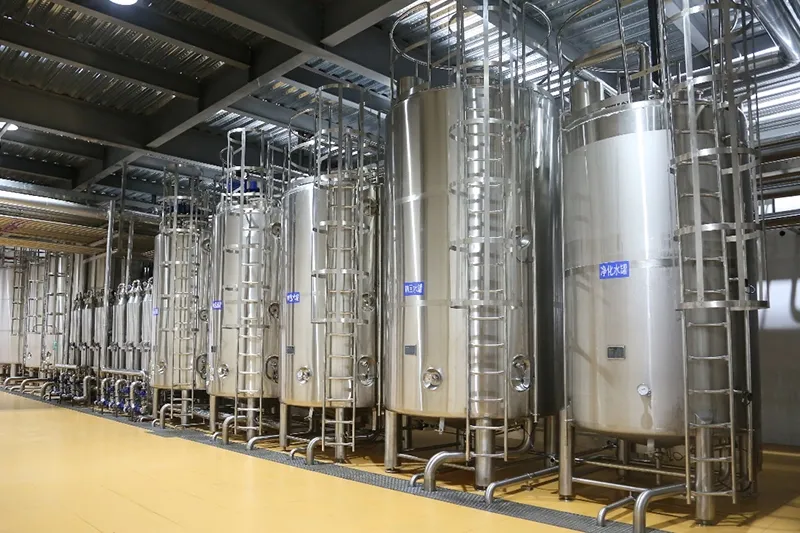
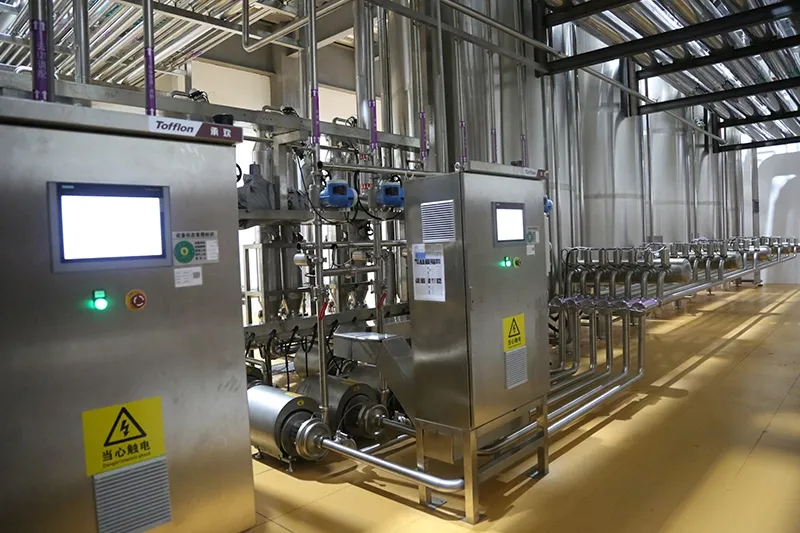
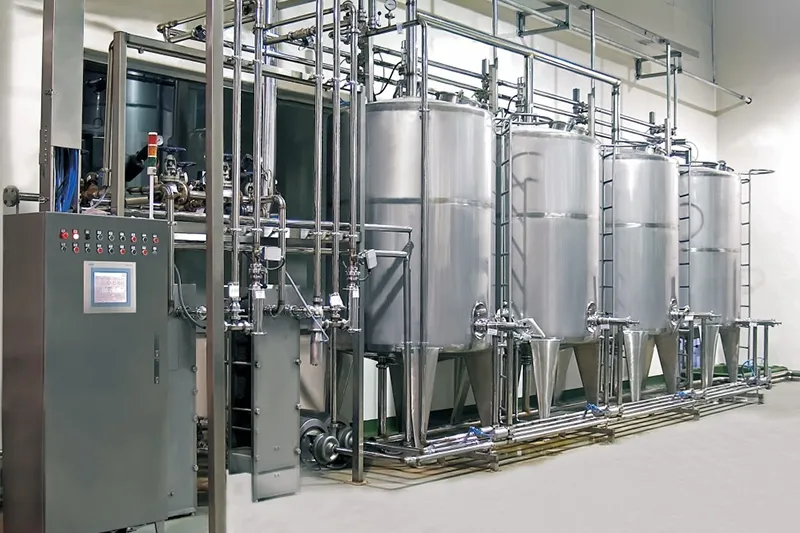
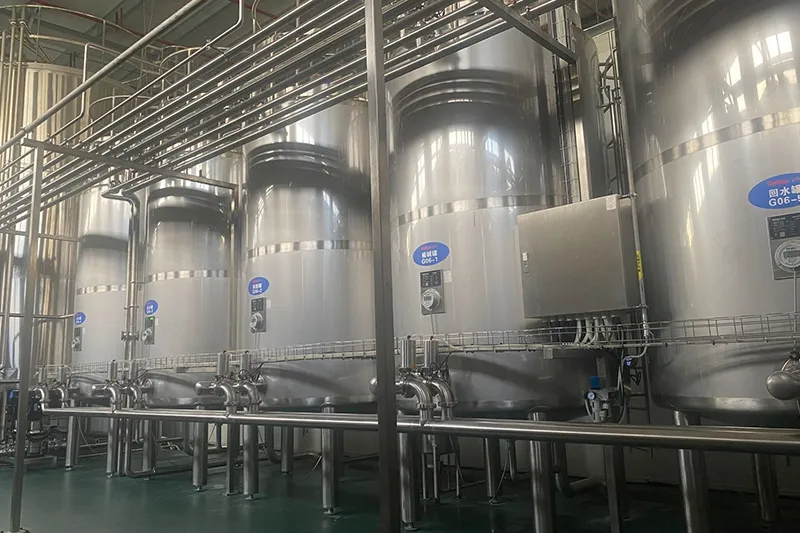
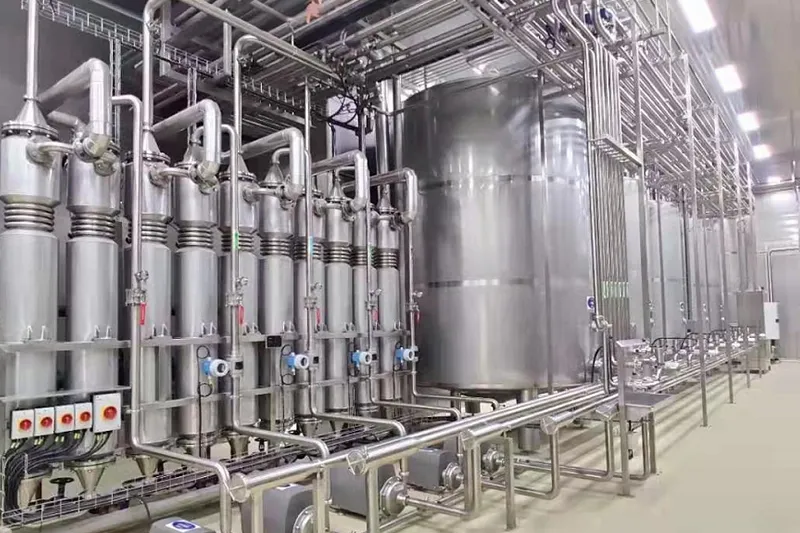
Cleaning-in-Place (CIP) systems clean the internal surfaces of tanks, process piping, pumps, valves, and entire food and beverage processing lines without the need for manual disassembly. They include a cleaning-solution supply unit, circulation pumps, and a control unit that manages the complete cleaning cycle. Preset CIP programs circulate water and cleaning solutions through the tanks, pipes, pumps, and valves, with alkaline or acid solutions, hot water, and sanitizing agents used as required. The cleaning cycle starts with a water pre-rinse, followed by a heated caustic wash to remove organic residue. Fresh water then clears out the alkaline solution before the acid wash removes scale and mineral deposits, and purified water is used for the final rinse. After the final rinse, hot water, peracetic acid, or steam can be used to sanitize the tanks and pipework.
- Pre-rinse
Clean water first runs through the tanks and pipework to wash away most of the leftover product and residues. - Caustic wash
Sodium hydroxide (NaOH) or another alkaline cleaner is then used to break down fats, proteins, and other organic residue, with heat added when needed to make the cleaning more effective. - Intermediate rinse
Fresh water removes the remaining alkaline solution before the acid wash starts. - Acid wash
The acid solution targets scale, mineral deposits, and metal-ion buildup left on the internal surfaces. - Final rinse and sanitization
Purified water rinses the tanks, pipes, pumps, and valves one final time, and hot water, steam, or a disinfectant such as peracetic acid can be used afterwards if a sanitization process is needed.
The CIP system is equipped with PLC control and color touchscreen that displays the cleaning process and main operating details as they happen. Operators can adjust the cleaning flow rate, temperature, tank pH, cleaning time, cleaning sequence, and return-line pH to match the cycle needed. If any problem occurs, an alarm function will notify them.
CIP systems are used in food, beverage, pharmaceutical, and other hygienic production plants to clean individual process units or complete processing lines without taking them apart.
- Processes such as bottle blow molding, beverage filling, and capping are completed in one integrated unit.
- Processes including blowing, filling, and capping are integrated in one unit, so bottles move directly from one stage to the next.
- Direct bottle transfer prevents empty bottles from being squeezed or deformed, while the integrated blow-fill-cap design helps reduce overall energy consumption.
- The contactless filling process minimizes direct contact at the filling point, while all beverage-contact parts are made from 316L stainless steel.